
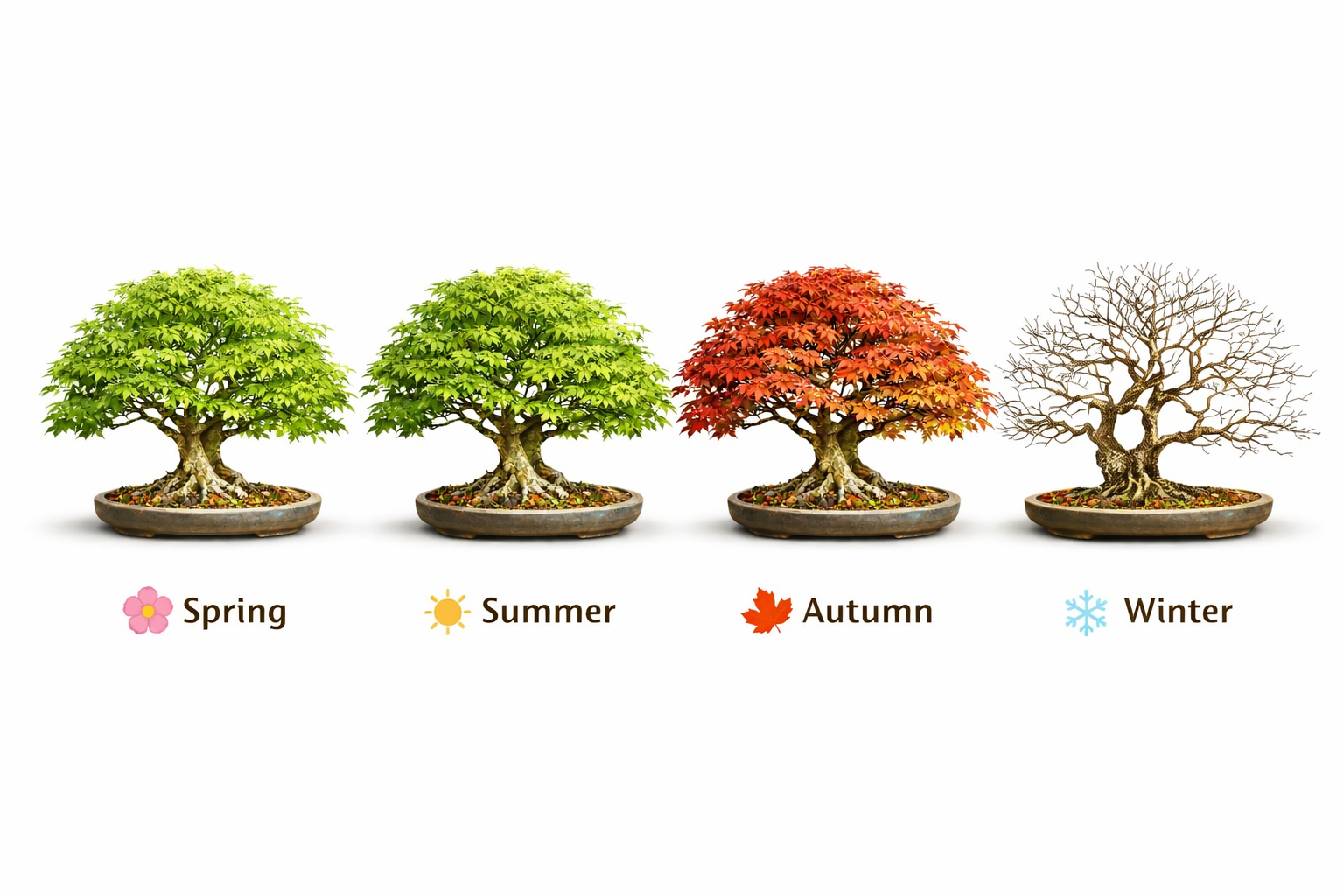
Japanese Maple Bonsai – Complete Species Guide:
To admire something, a few reasons may be enough. But to truly love a plant like the Japanese Maple bonsai, there is never just one reason — its beauty exists in every detail. When a tree possesses so many graceful qualities, how can one not fall in love with it?
Among bonsai species, the Japanese Maple bonsai stands as one of the most admired and cherished. Its delicate leaves, elegant branch structure, and breathtaking seasonal color changes make it a favorite for both beginners and experienced bonsai enthusiasts alike.
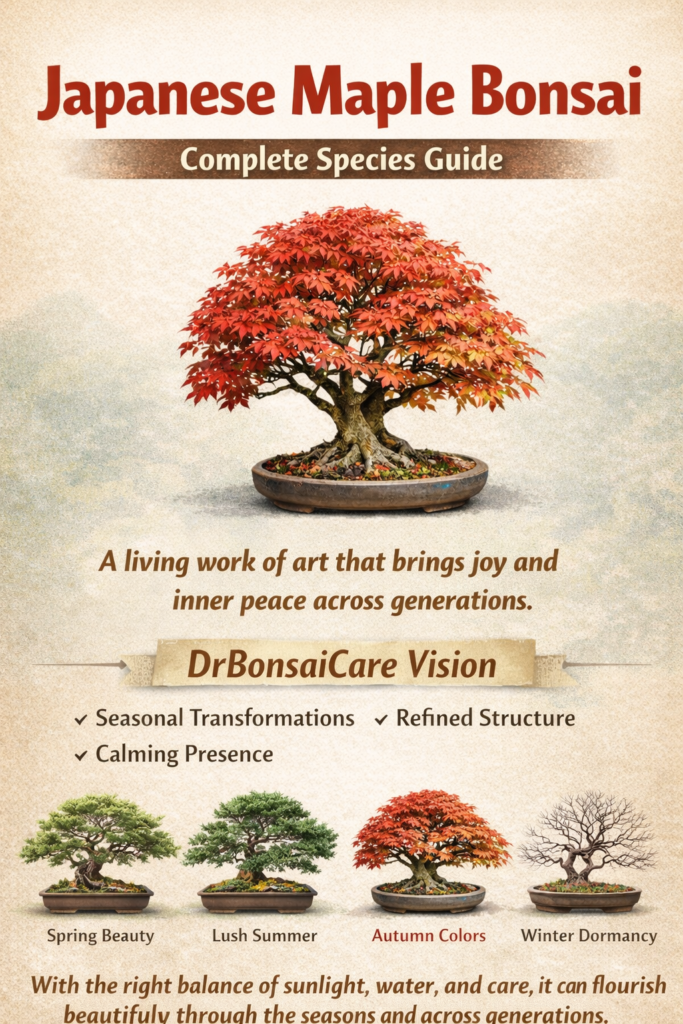
Species Overview (Botanical Background):
The name Japanese Maple itself reflects its Japanese origin, as it is named based on its native, historical, and cultural roots. It belongs to the species Acer palmatum, which naturally grows in Japan, Korea, and parts of China, and to some extent is also native to regions of Mongolia and southeastern Russia.
Today, however, Japanese Maples thrive widely across the United States in USDA hardiness zones 5–8 (and even up to zone 9 in some areas), making them a popular and long-lasting choice for American landscapes.
The Japanese Maple (Acer palmatum) is a deciduous tree. In its natural environment, it grows at a slow to moderate pace and typically thrives as an understory tree. Its branch structure is naturally fine, balanced, and elegant.
What Is a Japanese Maple?
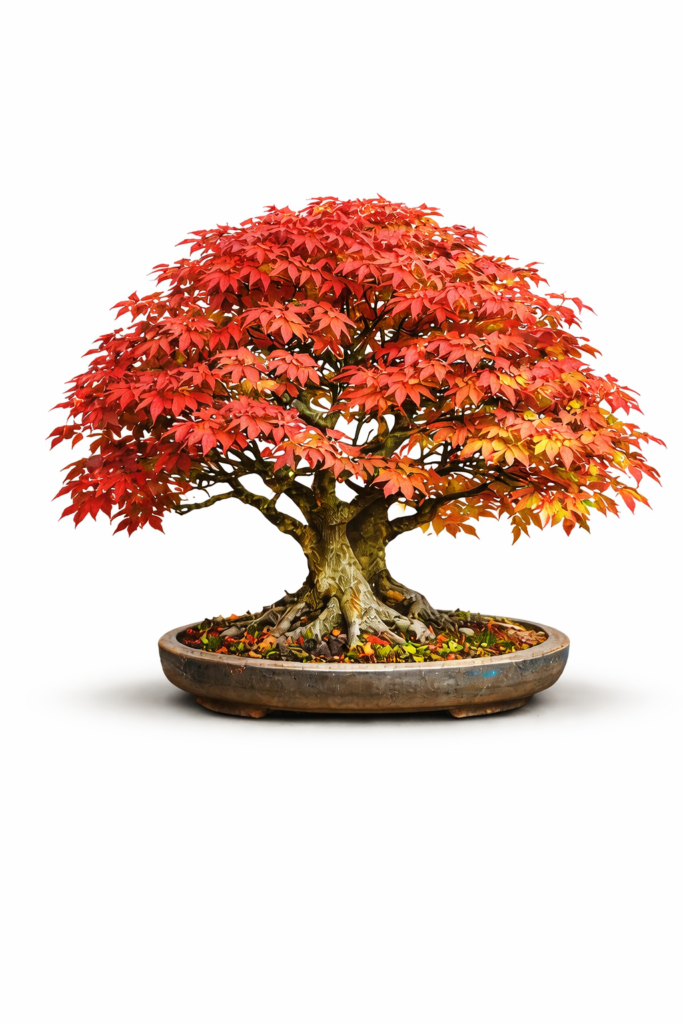
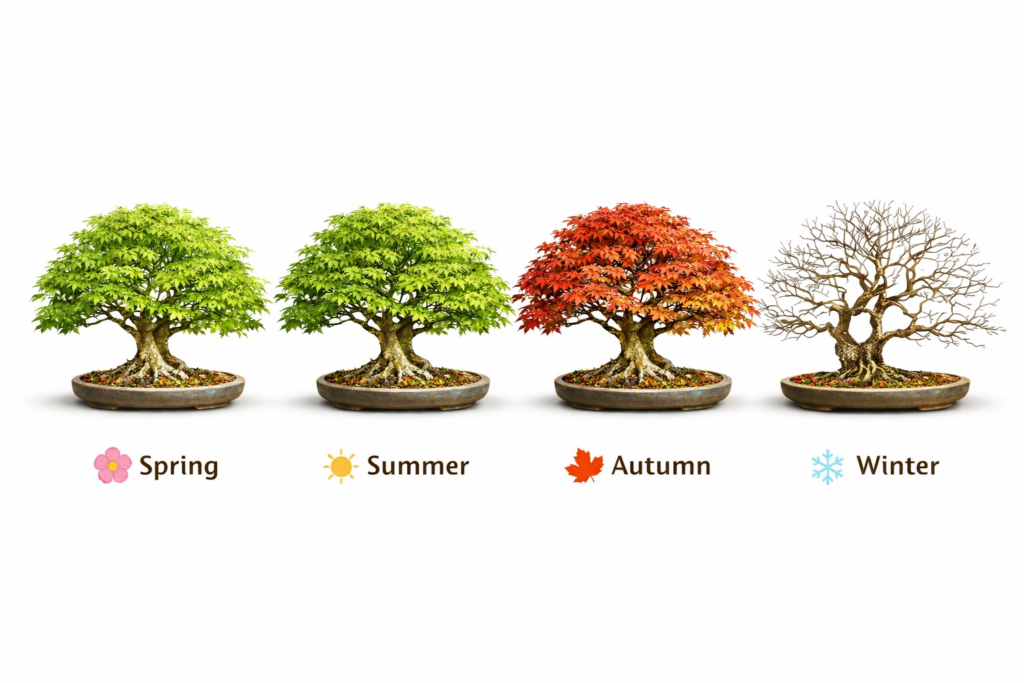
The Japanese Maple (Acer palmatum) is a deciduous tree species. Its deeply lobed leaves and their striking transformation—from fresh, vibrant green in the growing season to blazing shades of red, orange, and yellow in autumn, like flickering flames—are what make this tree so widely admired and popular.
In bonsai form, the Japanese Maple tree reflects beauty, balance, and the natural elegance of seasonal changes.
Why Choose Japanese Maple for Bonsai?:
Japanese Maple is one of the most respected species in classical bonsai because it combines botanical beauty with excellent bonsai response.
Bonsai‑specific strengths:
- Naturally small leaves (can be reduced further with proper care)
- Excellent ramification over time
- Strong response to pruning and defoliation (when healthy)
- Expresses all four seasons clearly in bonsai form
- Highly valued in traditional Japanese bonsai aesthetics
Japanese Maple is popular in bonsai because of its natural characteristics and visual appeal.
Key benefits:
- Beautiful leaf shape and fine ramification
- Stunning autumn colors
- Responds well to pruning and shaping
- Long lifespan when cared for properly
- Ideal for classical bonsai styles
Japanese Maple Bonsai Varieties:
There are many cultivars suitable for bonsai. Some popular ones include:
- Acer palmatum (Green Japanese Maple) – Best for beginners
- Acer palmatum ‘Atropurpureum’ – Red-leaf variety
- Acer palmatum ‘Deshojo’ – Bright red spring foliage
- Acer palmatum ‘Seigen’ – Fine leaves and compact growth
Best Bonsai Styles for Japanese Maple:
Japanese Maple adapts well to several traditional bonsai styles:
- Informal Upright (Moyogi)
- Formal Upright (Chokkan)
- Slanting (Shakan)
- Broom Style (Hokidachi)
- Forest Planting (Yose-ue)
Cascade styles are generally not recommended for this species.
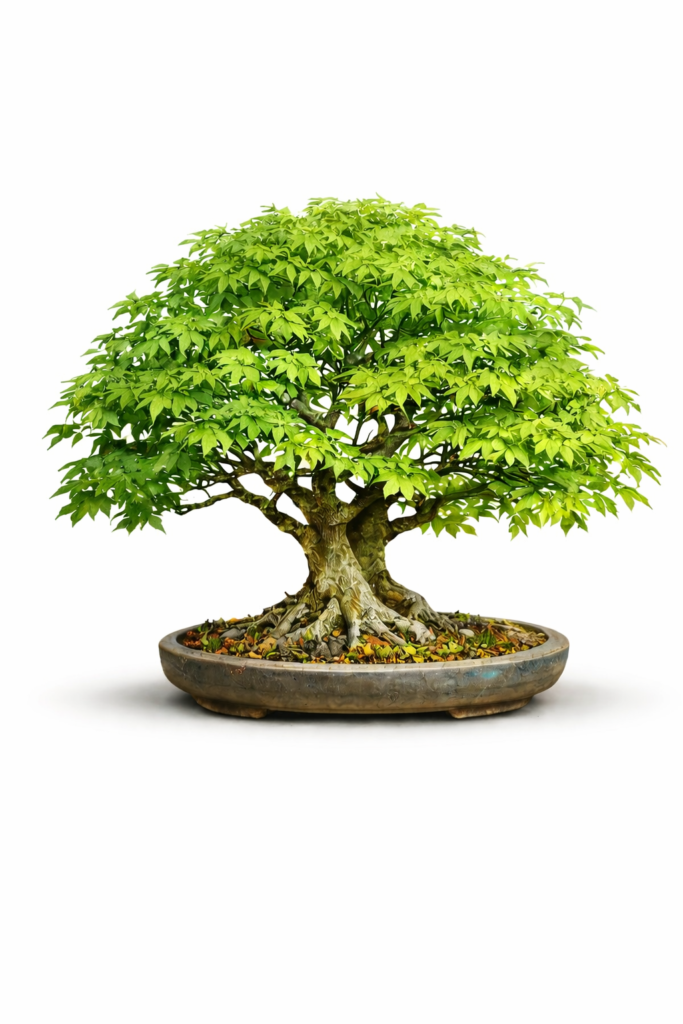
Japanese Maple bonsai in full green display during the active growing season.
Light Requirements:
Japanese Maple bonsai prefers bright, indirect sunlight.
- Morning sun is ideal
- Protect from harsh afternoon sun
- Too much sun can cause leaf burn
- Too little light leads to weak growth
In hot climates, partial shade is essential.
Watering Japanese Maple Bonsai:
Watering is one of the most important aspects of care.
- Keep soil consistently moist, not soggy
- Never allow the soil to dry out completely
- Water thoroughly until water drains from the bottom
- Increase watering during summer
Use soft or rainwater if possible.
Soil and Potting Mix:
Well-draining soil is critical for Japanese Maple bonsai.
Recommended soil mix:
- Akadama – 50%
- Pumice – 25%
- Lava rock or coarse sand – 25%
Good drainage prevents root rot and promotes healthy growth.
Pruning and Trimming:
Pruning helps maintain shape and fine branching.
- Structural pruning: Late winter
- Maintenance pruning: Spring and summer
- Pinch new shoots to control growth
- Avoid heavy pruning in peak summer
Always use clean, sharp tools.
Wiring Japanese Maple Bonsai:
Wiring should be done carefully due to delicate bark.
- Best time: Late autumn or winter
- Use aluminum wire
- Check frequently to avoid wire scars
- Remove wire as soon as branches set
Fertilizing Schedule:
Proper feeding keeps the tree healthy and colorful.
- Use balanced organic fertilizer
- Fertilize every 2–3 weeks during growing season
- Reduce fertilizer in late summer
- Stop fertilizing in winter
Avoid over-fertilizing, as it causes large leaves.
Seasonal Care Guide:
Spring
- New leaves emerge
- Begin fertilizing
- Protect from late frost
Summer
- Provide shade
- Water frequently
- Watch for leaf scorch
Autumn
- Enjoy vibrant colors
- Reduce fertilizer
- Prepare for dormancy
Winter
- Tree becomes dormant
- Protect roots from severe frost
- Minimal watering
Common Problems and Solutions:
- Leaf burn: Too much direct sun or lack of water
- Yellow leaves: Overwatering or poor drainage
- Pests: Aphids, spider mites – treat early
- Weak growth: Insufficient light or nutrients
Regular observation helps prevent major issues.
Is Japanese Maple Bonsai Good for Beginners?:
Yes, it is possible. With proper care, patience, and a little extra attention and dedication, the Japanese Maple patiently waits to reward you with its unmatched beauty.
Dr BonsaiCare Vision:
The Japanese Maple bonsai is a living expression of art that brings joy and inner peace to the mind. Its seasonal transformations, refined structure, and calming presence make it one of the finest choices for bonsai enthusiasts. When given the right balance of sunlight, water, and care, this tree has the potential to thrive beautifully across generations.