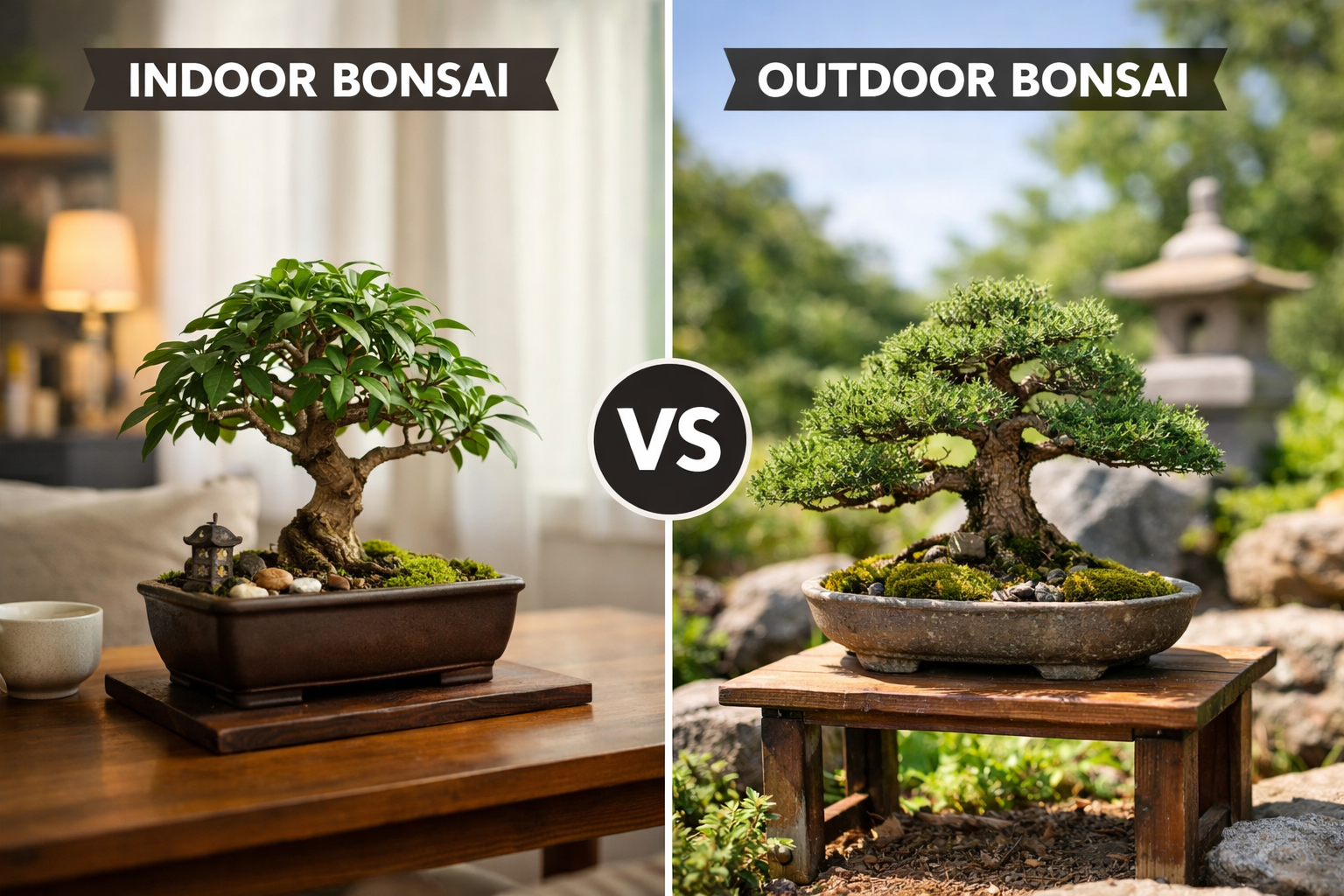
Indoor Bonsai vs Outdoor Bonsai: Which Is Better for Healthy Growth?
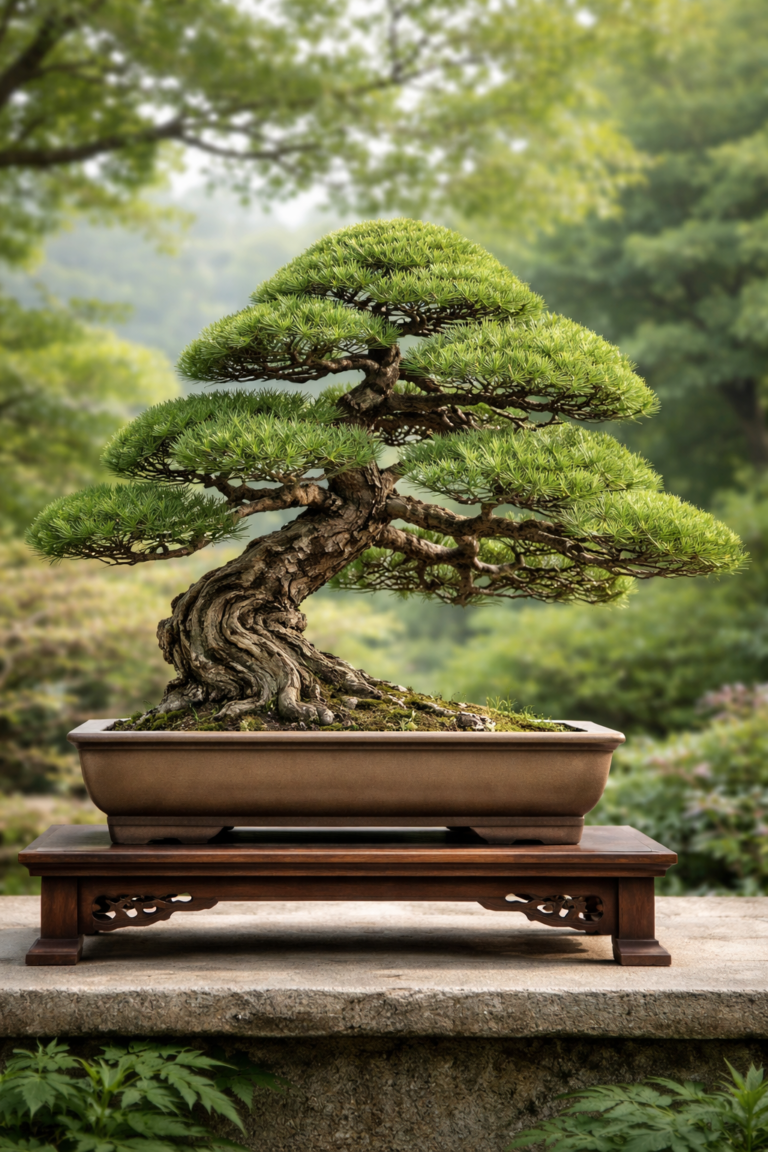
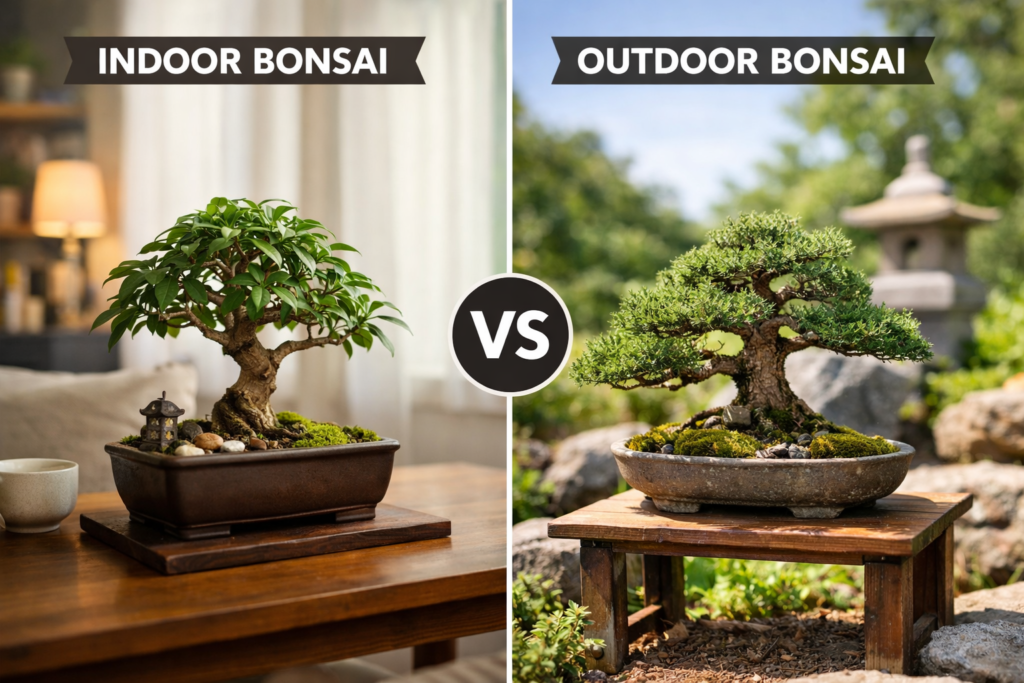
Many people believe indoor bonsai and outdoor bonsai are completely different types of plants. In reality, bonsai trees are normal trees grown in containers. The real difference between indoor bonsai and outdoor bonsai is not the tree itself, but the environment in which it grows best.
Understanding where a bonsai should be kept is the key to proper bonsai care and long-term health.
Outdoor Bonsai Care:
Outdoor bonsai are usually hardy tree species that need natural weather conditions to thrive. Popular outdoor bonsai trees include maple, juniper, and pine. These species can tolerate cold winters, frost, wind, and rain.
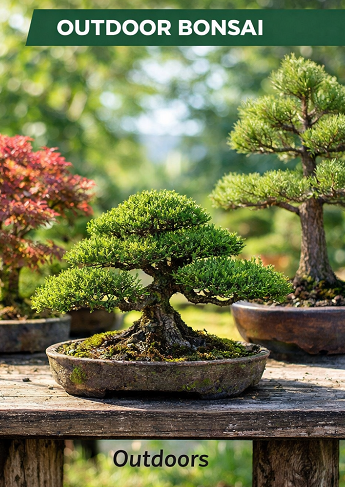
A crucial part of outdoor bonsai care is seasonal dormancy. During winter, these trees rest and prepare for strong growth in spring. Without this dormancy period, outdoor bonsai can weaken over time. For this reason, hardy bonsai species should always be kept outdoors where they can experience natural seasonal changes.
Indoor Bonsai Care:
Indoor bonsai trees are typically species that come from warmer or subtropical climates. Common indoor bonsai include Chinese Elm, Fig Tree, and Tea Tree. These trees adapt well to stable indoor temperatures and do not require strong winter dormancy.
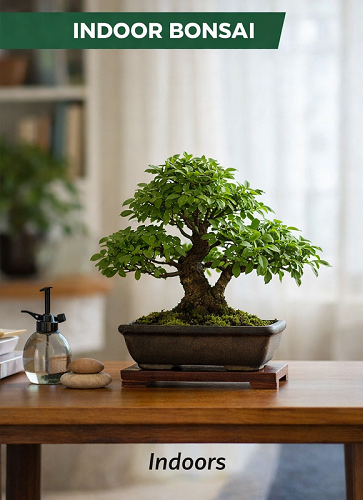
Modern homes provide a suitable environment for indoor bonsai, especially during winter. However, proper light and humidity are essential to keep indoor bonsai healthy.
Key Differences Between Indoor and Outdoor Bonsai:
The main differences between indoor and outdoor bonsai care are light, humidity, and temperature. Outdoor bonsai receive natural sunlight and humidity, while indoor bonsai usually receive light from one direction through windows. Rotating indoor bonsai regularly helps ensure even growth.
Indoor air tends to be dry, particularly in heated homes, so light misting can help maintain healthy leaves. Temperature management is also important, as excessive heat near windows can stress bonsai trees.
Bonsai care principles are universal, but growers should always adjust care based on their local climate, especially in regions with extreme heat or cold.
Why Choosing the Right Bonsai Tree Matters for Beginners
For beginners around the world, choosing the right bonsai tree is more important than buying tools, pots, or wire.
Many people give up on bonsai not because they lack interest, but because they start with a tree that is too difficult to care for. Some bonsai species need perfect watering, exact sunlight, and advanced pruning skills. When beginners make small mistakes, these trees may stop growing or even die.
This can be frustrating and discouraging.
Starting with a beginner-friendly bonsai tree makes the learning process much easier and more enjoyable.
Beginner Bonsai Trees Are More Forgiving If you are new to bonsai, mistakes will happen.
This is completely normal.
Common beginner mistakes include:
- Watering too much or too little Pruning the wrong branch.
- Placing the tree in the wrong location
Beginner-friendly bonsai trees, such as Chinese Elm, Cotoneaster, and Dwarf Jade, can recover from these mistakes. They grow back, produce new branches, and stay healthy even when care is not perfect. This allows beginners to learn without fear of failure. Easy Bonsai Trees Help You Learn Faster
Beginner bonsai trees grow more reliably. This helps you:
- See new growth sooner
- Understand how pruning affects the tree
- Learn watering habits naturally
- Build confidence step by step
When a tree responds well to your care, learning becomes faster and more rewarding.
Bonsai Care Should Be Simple at the Beginning
Many beginners believe bonsai requires expert-level care from day one.
That is not true. At the beginning, bonsai should be simple and stress-free.
Beginner bonsai trees:
Do not need constant attention, Can handle small care mistakes. Adapt well to different climates and environments. Do not require advanced techniques,
This makes bonsai a relaxing hobby instead of a stressful one. The Right Bonsai Tree Keeps You Motivated. Seeing your bonsai grow well gives you motivation to continue.
A healthy beginner bonsai helps you:
Enjoy pruning instead of worrying about it
Stay interested long-term
Gradually move on to more advanced species
Bonsai is a long-term journey, and starting with the right tree makes that journey enjoyable.
Simple Advice for Absolute Beginners
If you are new to bonsai:
Avoid rare or expensive trees
Do not start with difficult species
Choose trees known for beginner success
Focus on learning basic care first With time and experience, you can explore more advanced bonsai trees.
Conclusion:
Rather than focusing on whether a bonsai is “indoor” or “outdoor,” the most important thing is understanding where a particular tree naturally thrives best. When bonsai trees are placed in the correct environment and given proper care—adequate light, water, humidity, and temperature—they will remain healthy and grow beautifully for many years.